Archive | February, 2013

Naming the Dead: TBIJ drone tracking project

17 Feb

Pakistani tribesmen offer funeral prayer -GettyImages

A February 15 2009 drone strike killed at least 26. Few have so far been named. (Getty Images)

The Bureau is launching an ambitious new investigation, which will seek to identify as many as possible of those killed in US covert drone strikes in Pakistan, whether civilian or militant.

The Bureau is raising some of the money for this project through a crowd-funding appeal.

namingthedeadgraphic

Click here to donate to the Naming the Dead project.

As part of our ongoing monitoring and reporting of CIA and Pentagon drone strikes, the Bureau has already recorded the names of hundreds of people killed in Pakistan, Yemen and Somalia.

At the end of January 2013, the Bureau was able to identify by name 213 people killed by drones in Pakistan who were reported to be middle- or senior-ranking militants.

A further 331 civilians have also now been named, 87 of them children.

But this is a small proportion of the minimum 2,629 people who appear to have so far died in CIA drone strikes in Pakistan. The Bureau’s work suggests 475 of them were likely to have been civilians.

‘At the moment we know the names of fewer than 20% of those killed in Pakistan’s tribal areas. At least 2,000 deaths still remain publicly anonymous,’ said Chris Woods, who leads the Bureau’s covert drone war team.

‘Our aim will be to identify by name many hundreds more of those killed. A significant number of those identities will be known by local communities, by US and Pakistani officials, and by militant groups. We hope to convince them to share that information.’

Related story – Analysis: Why we must name all drone attack victims

The project has already secured substantial funding from a UK foundation – but it still needs more funds.

Today the US-based Freedom of the Press Foundation, a crowd-funding organisation aimed at raising money for public interest journalism, announced it is backing the Bureau’s Naming the Dead project. The Bureau’s new investigation will be one of four recipients of Freedom of the Press Foundation’s latest campaign.

Crowd-funding is an established way of supporting journalism in the US and it is increasingly being used in the UK as a way of funding projects, which established organisations ignore or will not fund.

Using the reach of the web, many people (the crowd) are able to give small amounts of money to back a cause or project in which they believe.

‘In the face of official secrecy, having the full facts about who is killed is essential  for an informed debate about  the effectiveness and ethics of the drone campaign,’  said Christopher Hird, managing editor of the Bureau. ‘And it is exciting to be able to give all of our supporters worldwide the chance to be part of  our first venture in this democratic form of funding.’

A challenging task
Government officials, media organisations and even militant groups are often quick to identify senior militants such as Yahya al-Libi and Ilyas Kashmiri when they are killed.

Yet little is said of the hundreds more alleged militants and civilians among at least 2,629 deaths in Pakistan drone strikes.

Sth Wana letter Jan 2009Both the US and Pakistani governments are likely to keep detailed records. A recent case at the Peshawar High Court heard that officials in the tribal agencies had prepared a confidential report which ‘included details of each and every drone attack and the number, names and ages of the people killed’.

Anonymous US intelligence officials have also revealed details of CIA video surveillance on particular strikes. And the ‘Terror Tuesday’ process – in which hundreds of named alleged militants have been selected by US agencies for targeted killing – has been widely reported.

Photographs and other documents also occasionally surface. When a civilian family was killed in the first drone strike of Barack Obama’s presidency, local officials issued formal paperwork (see right) that was later obtained by the campaign group Center for Civilians in Conflict.

ID cards, family photographs and eyewitness testimony of attacks can all provide useful corroborating evidence. The graves of militants killed in drone strikes can also name them as ‘martyrs’ and give details of the strikes in which they died.

Drawing on information from a wide array of sources, the Bureau’s team will seek to build a detailed understanding of those killed.

Focus on Pakistan
While the Bureau will seek to extend the project to Yemen and Somalia in the near future, the initial focus will be on the nation where most US covert drone strikes have taken place.

Researchers based in Pakistan and the UK will seek to build up biographical information for all of those killed, whether civilian or militant – their name, age, gender, tribe, and village, for example. Where possible, photographs, witness statements and official documentation will also be published.

The team will seek assistance from the Pakistan and US governments in identifying those killed. And researchers will also call on Taliban factions and other militant groups to release information on the many hundreds of fighters killed in more than 360 US drone strikes since 2004.

CIA Drone Strikes in Pakistan 2004–2013

Total US strikes: 364
Obama strikes: 312 
Total reported killed: 2,640-3,474
Civilians reported killed: 473-893
Children reported killed: 176
Total reported injured: 1,270-1,433

US Covert Action in Yemen 2002–2013

Total confirmed US operations (all): 54-64
Total confirmed US drone strikes: 42-52
Possible extra US operations: 135-157
Possible extra US drone strikes: 77-93
Total reported killed (all): 374-1,112
Total civilians killed (all): 72-178
Children killed (all): 27-37

US Covert Action in Somalia 2007–2013

Total US strikes: 10-23
Total US drone strikes: 3-9
Total reported killed: 58-170
Civilians reported killed: 11-57
Children reported killed: 1-3

The Bureau of Investigative Journalism.

Sweden is no longer neutral; drones are ‘totally illegal’

7 Feb

In part 2 [ Download] of an interview with the Voice of Russia, Agneta Norberg, Vice Chair of the Swedish Peace Council, Member of Steering Committee in International Peace Bureau and a member of the board of directors of Global Network Against Weapons and Nuclear Power in Space discusses the facts surrounding Sweden’s non-neutrality and the country’s involvement in NATO and Western military expansion. Ms. Norberg gives her views on drones which she calls “murder machines” and the development and testing of drones in Sweden, including a new drone being developed in a joint European project.

Part 1 of the interview

Robles: How does Sweden officially explain that they allow these installations? And do you think all these maneuvers are designed to intimidate Russia or to try to exercise sovereignty on the Arctic?

Norberg: Well, when we drift to Arctic, I think there are two things going on here. When they are interviewed, those who are in charge of these maneuvers, they always answer that this is for the Arctic, they openly express this – these maneuvers are for the Arctic and the resources which will be available when the ice is melting.

But the NATO maneuvers are so seldom covered in the news, in media, specifically not here in the south, I live in Stockholm, up in the north, in the local newspapers they are covered rather extensively. And they used to send quotes from the newspapers for me, otherwise I wouldn’t have known it, because the media doesn’t cover it in the south, in Stockholm, where most of the people live.

So, it is, a sort of: secretly hidden from the public to understand what is really going on. But when they are asked, they say: this is for the Arctic.

And also one thing I think you’ve mentioned is that Sweden is neutral. Forget that! We are not neutral! We have for long abolished the neutrality. We are not non-aligned; we are nothing, because we are openly conducting war games with NATO.

But there is one difficulty because the people in Sweden and in Finland are against. It is only about 19% of the Swedish population that accept NATO, the others don’t. So, they have that problem here.

But I can see the lust, how they try to form an enemy out of Russia, and you should understand this: how Russia now is demonized, again. And I’m so old, so I remember how they were demonizing the former Soviet Union, always, and almost on daily basis. And now we are there again.

So, we have here in one of the latest (Names Swedish newspaper in Swedish) a picture of Putin and Russia is arming, here, and how the Russian bear now starts showing its muscles. So, at the same time, as you have these military maneuvers and military flexing of muscles, you seldom get information to the public here.

I was speaking in Norway last summer and they didn’t know about these things. I’m very often on speaking tours in the north. I was in Finland last autumn and they didn’t know about these military maneuvers either. They were really shocked when I told them.

So, here we are again, from the Cold War days, gradually Russia is the threat. And when I talk to Russian people they are not aware of this. It is like when I was travelling in the former Soviet Union, they were not aware of how you were depicted and described as a big-big threat. And I think we are there again, hiding what the NATO is doing in our country and in the north, and describing the threat of Russia coming. There we are again.

Robles: Would you say it is worse than it was in the Soviet times?

Norberg: It is about the same now. We are in square one, we are back in the Cold War sentiment in a way. But it is even worse now because during the Cold War, at least Sweden had a posture that we are non-aligned and neutral. Not anymore! We have left our neutrality, we have left our non-aligned posture.

Not openly, the neutrality we have left openly, but not the non-aligned posture. I can give you an example: they are now training in the North America (for) war in Nevada.

They were training together with the US in 2006 in Alaska. They went with 6 or 7 war planes to Alaska and made a huge maneuver outside North Korea together with the US.

So, we are actively joining in different parts of the world. Of course we are in Afghanistan now.

And so I think you have to start to understand that Sweden has quite another position now and we are a NATO country. It is only a document that is left to be done. That’s the situation now in Sweden.

Robles: Can you tell us a little bit about what you think the US and NATO’s plans are for the Arctic?

Norberg: I can see that they are making a lot of war games together up in the north.

And I also know that the US and Canada are the same, I mean they are in the same organization. Canada has lost much of what they had before. I have a map in front of me where I have all the installations, and the North American-Canada Command had merged together.

So, up in the north you have a very strong militarization from Canada’s point of view and they are building up their military as never before.

And one thing that I think is important to mention is the drones. Canada is planning for a huge drone fleet, and so is Sweden. Now we have one of the world’s biggest drones which is ready in the North European Airspace Test Range which is one of the biggest in Europe for training drones.

Robles: What’s your opinion on drones?

Norberg: They should be banished, abolished or banned because they are terrible murder…, we call them “murder machines”. They are conducted from Nevada test site. They sit there in front of computers and kill people in Yemen, in Pakistan and many places.

We have a huge training area: as big as Macedonia, called the North European Airspace Test Range in the northern part of Sweden where they train these drones. So, we are in this arms buildup, it’s rather dangerous I think.

The newest one is Neuron. It is a cooperation between Sweden, France, Italy, Germany, Switzerland on one of the world’s biggest drones Neuron. That is a prototype that is now ready this year.

Robles: What is your opinion on the legality of drones because the users face no risk?

Norberg: They are totally illegal. You sit in a bunker, you don’t see anything, you just sit in front of a screen and see the target. We call them “murder machines” because these are murders. They “say” they kill Al-Qaeda.

Agneta Norberg is the Vice Chair of the Swedish Peace Council, a member of the Steering Committee in International Peace Bureau and on the board of directors of the Global Network Against Weapons and Nuclear Power in Space.

Voice of Russia.

Human Rights Violations and Ethnic Tensions in Mali

4 Feb
  • 734471_157211627763331_768923227_nAmnesty International: “The Malian army has committed serious human rights breaches plus violations of international humanitarian law (IHL) during the ongoing conflict against armed groups in the country, including extrajudicial executions of civilians.”
  • Human Rights Watch: “Malian government forces summarily executed at least 13 suspected Islamist supporters and forcibly disappeared five others from the garrison town of Sévaré and in Konna during January 2013…Islamist armed groups in Konna executed at least seven Malian soldiers, five of whom were wounded, and used children as soldiers in combat.”
  • AP: “Northerners living in the central and southern parts of Mali say they have faced discrimination and fear of reprisals by those who blame the country’s problems on anyone who looks Tuareg or Arab.”
  • IRIN: “The Dynamics of Inter-Communal Violence in Mali.”
  • IRIN: “Killings, Disappearances in Mali’s Climate of Suspicion.”

405691_371377156293639_1919275131_n

via Sahel Blog

Ethiopia: journalist arrested for covering Muslim protests

3 Feb

ETHIOPIA-RELIGION-MUSLIM-PROTESTNairobi, February 1, 2013–Ethiopian security forces have detained for two weeks without charge the editor of a newsmagazine and accused him of incitement to terrorism, according to local journalists. The Committee to Protect Journalists calls on authorities to release Solomon Kebede immediately and halt their harassment of journalists affiliated with the weekly Ye Muslimoch Guday.

Police in Addis Ababa, the capital, on January 17 arrested Kebede, managing editor of the now-defunct paper Ye Muslimoch Guday (“Muslim Affairs”), and took him to the Maekelawi federal detention center. Solomon’s health is in poor condition and he has been held without access to a lawyer, the journalists said. A court date has been set for February 13.

Local journalists told CPJ they believed the arrest was linked to Solomon’s columns that had criticized perceived government intrusion in religious affairs. Solomon had covered demonstrations staged last year by Muslims protesting alleged interference in Islamic Council elections. The protests were a highly sensitive issue for the government, which feared a hardline Islamist influence within the predominantly Christian country, news reports said.

In an effort to suppress coverage of the protests, authorities began to crack down on Muslim-oriented publications. At least three papers, including Ye Muslimoch Guday, were forced to stop publishing, and police detained at least two reporters of the U.S. government-funded Voice of America. Authorities also arrested Yusuf Getachew, editor-in-chief of Ye Muslimoch Guday, in July, news reports said. Yusuf is awaiting trial in Kality Prison on vague anti-state and terrorism charges. In June, police raided the Addis Ababa offices of the private Horizon printing press and ordered the publisher to stop printing Ye Muslimoch Guday. The paper has not published since July 2012.

Local journalists also told CPJ that they suspected police may have arrested Solomon so they could question him on the whereabouts of two of his colleagues from Ye Muslimoch Guday. Senior Editor Akemel Negash and Copy Editor Isaac Eshetu fled into hiding in August after police kept their homes under surveillance for weeks, local journalists said.

“We are troubled by the arrest of Solomon Kebede and the government’s ongoing crackdown against the staff of Ye Muslimoch Guday,” said CPJ East Africa Consultant, Tom Rhodes. “We are also concerned about Solomon’s well-being in the Maekelawi federal detention center, where numerous detainees have reported being tortured. Authorities should release Solomon immediately.”

Committee to Protect Journalists.

Turkey continues persecution of human rights defenders

2 Feb
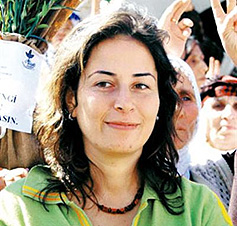
Pınar Selek, a sociologist and writer, was convicted on specious charges in Turkey after three previous acquittals.

Pınar Selek, a sociologist and writer, was convicted on specious charges in Turkey after three previous acquittals.

On Friday of last week, a Turkish court convicted Pınar Selek, a sociologist and writer, on charges arising from an explosion at a market in Istanbul in 1998. Yes, 1998. Fifteen years ago, Turkish authorities arrested the researcher, who was conducting ongoing interviews with the Kurdish minority, tortured her to find out the names of those she had interviewed, and charged her for the explosion at the market. For 15 years, authorities have been trying to convict Selek. During that time she has been acquitted three times, but the judicial harassment continued.

Selek’s work focused on the Kurdish minority and women. And after the explosion, prosecutors claimed that Selek had something to do with a terrorist organisation that planted a bomb. But experts even disagreed if there was a bomb in the first place – many experts said it was instead a gas leak that caused the explosionWitnesses for the prosecution withdrew testimony as well, claiming that it had been coerced under torture. The through the IRCT project on forensic evidence, experts corroborated that Selek had in fact been tortured in detention.

Today, Selek remains in Strasbourg, France, but a visit to her home country could result in an arrest and life imprisonment. The IRCT is calling for the charges to be dismissed and the harassment to end.

But use of Turkey’s extremely broad and easily abused anti-terrorism legislation, these arrests are not uncommon. Just earlier this month, police arrested 15 lawyers, all of whom belong to Progressive Lawyers Association (Cagdas Hukukçular Dernegi – ÇHD) – an extremely important non-profit organisation that provides legal assistance for victims of human rights violations, including torture.

Engin Çeber, a human rights activist, was arrested and tortured, cause his death in 2008. The lawyers pursuing the case were arrested in January this year.

Engin Çeber, a human rights activist, was arrested and tortured, cause his death in 2008. The lawyers pursuing the case were arrested in January this year.

One such case of theirs was on behalf of Engin Çeber, a human rights activist that was also arrested and tortured in detention in 2008. He died from his injuries.Only after independent forensic evidence confirmedthat he had been tortured did Turkish authorities investigate the case. Three prison officials were sentenced to life; nine others were convicted and given prison terms ranging from 5 months to 12 1/2 years.

These two cases point to a long-term continuous abuse of the anti-terrorism legislation to target human rights defenders and critics of the Turkish state. In just October of law year, the UN Human Rights Committee criticized Turkey on this issue, writing in their final report that:

The Committee is concerned that several provisions of the 1991 Anti-Terrorism Law (Law 3713) are incompatible with the Covenant rights. The Committee is particularly concerned at: (a) the vagueness of the definition of a terrorist act; (b) the far-reaching restrictions imposed on the right to due process; (c) the high number of cases in which human rights defenders, lawyers, journalists and even children are charged under the Anti-Terrorism Law for the free expression of their opinions and ideas, in particular in the context of non-violent discussions of the Kurdish issue. (arts. 2, 14 and 19) [DOC]

The IRCT and our partners are concerned for the safety of the lawyers that remain in custody. But further to that, what does this mean for human rights defenders in Turkey and their continuous fight against torture and other human rights violations?

World Without Torture.